
Goals of Institute for Green Infrastructure
The creation of massive development of green infrastructure, taking into full account the environmental sustainability, leading to the provision of green economy.
1. Sustainable Research
Sustainable research is an evolving paradigm that extends beyond traditional research boundaries, embedding the principles of sustainability into every stage of the research process.
2. Education
Education is the process of facilitating learning, or the acquisition of knowledge, skills, values, beliefs, and habits. It’s a fundamental pillar of society, enabling individual growth and societal progress
3. Socialization
Socialization is the lifelong process through which individuals learn and internalize the norms, values, beliefs, and behaviors of their society. It’s how we develop our sense of self and learn to participate as members of a community.
4. Training
Training is the process of teaching, developing, or improving skills, knowledge, and competencies of a person or group to perform specific tasks or roles effectively.
5. Guideline Development
Guideline development is the systematic process of creating evidence-based recommendations to guide decision-making, policies, or practices in a specific field.
6. Assessment and Certification
Assessment and Certification is the process of evaluating an individual’s knowledge, skills, and competencies against established standards, followed by the official recognition or credential (certificate) awarded to confirm that the person meets those standards.

DEFINITION OF GREEN INFRASTUCTURE
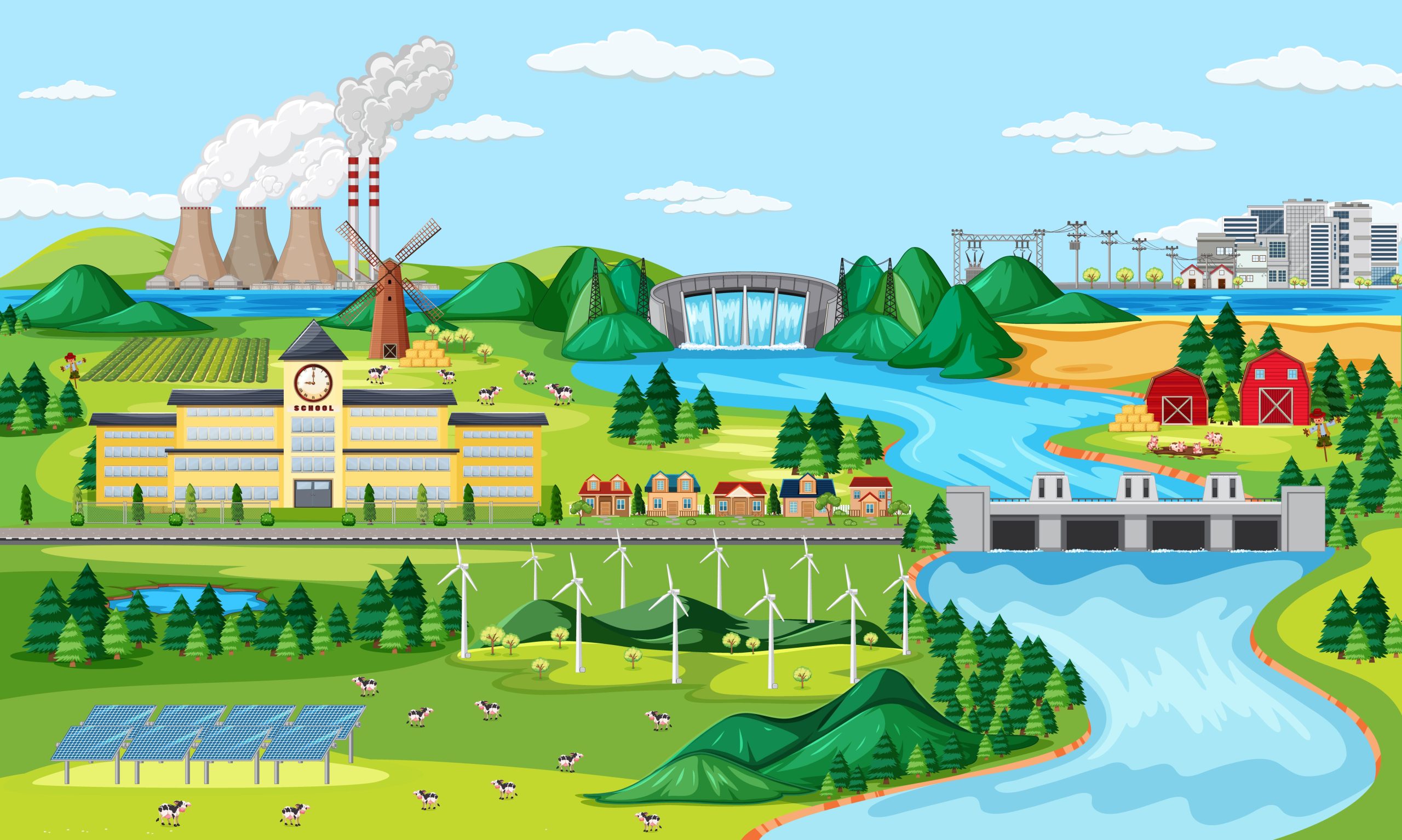
Green infrastructure can be defined as physical networks that provides the ingredients for solving environmental degradation and climatic changes by building with nature. The main components of this approach include canopy of flora, stormwater management, climate adaptation, reduction of heat stress, increasing biodiversity, food production, better air quality, and sustainable energy. More specifically, green infrastructure would deal with green building, green railways, green ports, and green airports.
RATIONALES FOR GREEN INFRASTRUCTURE
GREEN ECONOMY. The concept of the green economy has emerged as a strategic priority for many governments. By transforming their economies into drivers of sustainability, these countries will be primed to take on the major challenges of the 21st century – from urbanization and resource scarcity to climate change and economic volatility.
THE SUSTAINABLE DEVELOPMENT GOALS (SDGs). The SDGs are a collection of 17 global objectives established by the United Nations in 2015 as part of the 2030 Agenda for Sustainable Development.
THE CLIMATE CHANGE AND GLOBAL WARMING. Climate change is a long-term change in the average weather patterns that have come to define Earth’s local, regional, and global climates. Indonesia is prone to this climate change phenomenon as the rise of sea level would inundate a lot of coastal areas in many islands.
DEFORESTATION. Global and tropical forest loss reached 151 million ha and peaked in the 1980s and early 1990s. In 2020, Indonesia had 93.8 million ha of natural forest, extending over 50% of its land area. In 2024, it lost 261.575 ha; an increase of 4,191 ha on the previous year, which was recorded at 257.384 ha. This loss equivalent to 194 Mt of CO₂ emissions. As much as 144,000 ha of this loss was found to be within Indonesia’s official forest.

BENEFITS OF GREEN INFRASTRUCTURE
Green infrastructure can have economic, social, and environmental benefits. The economic benefits include the improves climate resiliency. The social benefits created by green infrastructure include green spaces, urban tree canopies, parks, green streets, that can provide a peaceful atmosphere for residents to enjoy. The environmental benefits of green infrastructure include increasing adaptive capacity in communities experiencing flooding, heat waves, and water quality challenges. are many.
WHAT IfGI WOULD AND COULD DO?
- Green infrastructure planning, design, and supervising
- Research on green infrastructure investment and financing
- Training and certification
- Consultancy and advocacy
- Public consultation and participation
- Triple Helix Model
- Publication